
Navigating the world of legal contracts can feel like deciphering ancient hieroglyphs, but understanding their fundamental principles is crucial for anyone involved in business, personal transactions, or even everyday life. From rental agreements to employment contracts, we interact with legal contracts far more often than we realize. This guide demystifies the process, providing a clear and concise overview of key elements, interpretation strategies, negotiation tactics, and potential legal ramifications.
We’ll explore the essential components of a valid contract—offer, acceptance, consideration, capacity, and legality—and examine how these elements interact to create a legally binding agreement. We’ll also delve into the intricacies of contract interpretation, focusing on common sources of ambiguity and effective strategies for resolving disputes. Ultimately, this guide aims to empower you with the knowledge to confidently approach and understand legal contracts, protecting your interests and ensuring smooth transactions.
Interpreting Contractual Language

Understanding the nuances of contractual language is crucial for ensuring a contract’s effectiveness and mitigating potential disputes. Clear and unambiguous language is paramount, but given the complexities of legal drafting, ambiguity often arises. This section will explore strategies for interpreting unclear language and highlight key rules of contract interpretation.Interpreting ambiguous or unclear language requires a systematic approach. It involves careful consideration of the contract’s overall purpose, the context in which it was created, and the parties’ intentions as demonstrably expressed within the document itself.
A thorough understanding of relevant legal principles is also essential.
Rules of Contract Interpretation
Contract interpretation hinges on established legal principles. The plain meaning rule dictates that words should be given their ordinary and commonly understood meaning unless the context clearly indicates otherwise. The context rule, conversely, emphasizes the importance of considering the entire contract, the surrounding circumstances, and the parties’ intentions to interpret ambiguous clauses. Courts will often look at the entire agreement to understand the meaning of a particular phrase or clause within the larger context.
For instance, a clause that seems restrictive in isolation might be understood differently when considered alongside other clauses that grant broader rights. This holistic approach helps avoid misinterpretations stemming from viewing clauses in isolation.
Considering the Entire Contract
Analyzing a contract clause in isolation can be misleading. The context of the entire agreement must always be considered. Each clause should be interpreted in light of the others to ascertain the parties’ overall intent. A seemingly contradictory clause might become clear when viewed within the larger framework of the contract. For example, a clause limiting liability might appear unfair on its own, but when considered alongside a clause detailing the scope of services provided, the limitation might appear reasonable and proportionate.
Ignoring the interplay between clauses can lead to inaccurate and potentially harmful interpretations.
Common Sources of Ambiguity
Understanding common sources of ambiguity helps prevent them in drafting and facilitates better interpretation when they do arise. Ambiguity often stems from factors such as:
- Vague or imprecise language: Using terms like “reasonable,” “substantial,” or “appropriate” without further definition can create ambiguity. For example, “a reasonable amount of time” could be interpreted differently by each party.
- Inconsistent terminology: Using different terms to refer to the same concept throughout the contract can lead to confusion. For example, using “client,” “customer,” and “purchaser” interchangeably can create ambiguity regarding the exact party referenced.
- Incomplete sentences or clauses: Grammatical errors or incomplete thoughts can create significant ambiguity, leaving room for multiple interpretations. A sentence fragment such as “the payment to be made upon…” leaves the completion and exact terms open to interpretation.
- Lack of definition of key terms: Failing to define key terms used in the contract can lead to disputes over their meaning. For instance, not defining “acceptable quality” in a goods supply contract can lead to arguments later.
- Conflicting clauses: The presence of contradictory clauses within the contract will naturally cause ambiguity and necessitate careful interpretation to reconcile the differences. A contract stating both a right of termination and a requirement for a 12-month notice period, for example, presents a direct conflict.
Contract Negotiation and Drafting
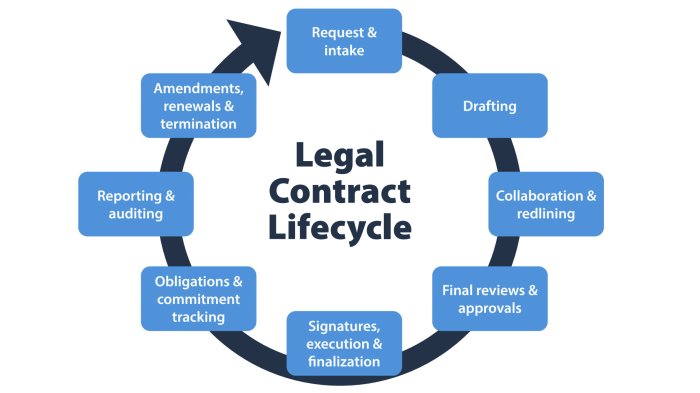
Contract negotiation and drafting are crucial stages in the lifecycle of any agreement. Successfully navigating these stages requires a blend of legal knowledge, strategic thinking, and effective communication. A well-drafted contract protects the interests of all parties involved, minimizing future disputes and ensuring a clear understanding of obligations and responsibilities.
Key Negotiation Tactics
Effective contract negotiation involves employing various tactics to achieve a favorable outcome. These tactics range from collaborative strategies aimed at mutual benefit to more assertive approaches focused on securing specific terms. Understanding these tactics is essential for navigating the complexities of contract negotiations.
- Preparation and Research: Thoroughly understanding the subject matter, the other party’s position, and relevant legal precedents is paramount. This allows for informed decision-making and strengthens your negotiating position.
- Active Listening and Clarification: Listening attentively to the other party’s concerns and asking clarifying questions demonstrates respect and helps identify areas of potential compromise.
- Identifying Interests and Priorities: Understanding the underlying interests and priorities of each party allows for more creative solutions that address everyone’s needs. This moves beyond simply focusing on stated positions.
- Strategic Concessions and Trade-offs: Being willing to make concessions on less important points can pave the way for agreement on more critical terms. This involves identifying what you are willing to give up in exchange for something of greater value.
- Utilizing BATNA and WATNA: Knowing your Best Alternative To a Negotiated Agreement (BATNA) and Worst Alternative To a Negotiated Agreement (WATNA) provides a clear benchmark for evaluating offers and determining your walk-away point.
Comparison of Negotiation Styles
Negotiation styles vary considerably, influencing the overall process and outcome. Different styles can be more or less effective depending on the context and the parties involved.
- Competitive Negotiation: This style prioritizes winning and securing the best possible outcome for oneself, often at the expense of the other party. While effective in certain situations, it can damage relationships and lead to future conflict. An example would be a high-stakes auction where the goal is to acquire the item at the lowest price possible, regardless of the other bidders’ feelings.
- Collaborative Negotiation: This approach focuses on finding mutually beneficial solutions, prioritizing long-term relationships and shared success. A collaborative approach might be used in a joint venture where ongoing cooperation is essential for the success of the project. Both parties aim for a “win-win” outcome.
- Accommodative Negotiation: This style prioritizes maintaining a positive relationship with the other party, even if it means compromising on some of your own interests. This might be used in negotiations between family members regarding an inheritance.
Step-by-Step Guide to Drafting a Legally Sound Contract
Drafting a legally sound contract requires a methodical approach. Overlooking crucial steps can lead to ambiguities, disputes, and ultimately, costly litigation.
- Define the Scope and Purpose: Clearly articulate the objectives and scope of the agreement. What are the parties agreeing to do, and what are the key deliverables?
- Identify the Parties: Accurately identify all parties involved, including their legal names and addresses.
- Define Key Terms: Clearly define all essential terms to avoid ambiguity. Use precise language and avoid vague or subjective terms.
- Artikel Obligations and Responsibilities: Clearly specify the rights and obligations of each party. This includes timelines, deliverables, and performance standards.
- Address Payment Terms: Clearly define payment schedules, methods, and any associated penalties for late payment.
- Include Dispute Resolution Mechanisms: Specify how disputes will be resolved, such as through mediation, arbitration, or litigation.
- Governing Law and Jurisdiction: Specify the governing law and jurisdiction for resolving any disputes.
- Review and Revision: Thoroughly review the draft contract for clarity, completeness, and accuracy. Obtain legal counsel if necessary.
Incorporating Boilerplate Clauses
Boilerplate clauses are standard clauses commonly included in contracts to address routine matters. While they are often standard, it’s crucial to ensure their relevance and clarity within the specific context of the agreement. Simply including them without review can lead to unintended consequences.
- Confidentiality Clauses: Protect sensitive information shared during the contract’s performance.
- Limitation of Liability Clauses: Limit the liability of one or both parties for certain types of damages.
- Indemnification Clauses: Artikel the circumstances under which one party agrees to compensate the other for losses or damages.
- Termination Clauses: Specify the conditions under which the contract can be terminated.
- Force Majeure Clauses: Address unforeseen events, such as natural disasters, that prevent a party from fulfilling its obligations.
Common Contractual Clauses
Understanding common contractual clauses is crucial for navigating the legal landscape of agreements. These clauses, often overlooked, significantly impact the rights and responsibilities of all parties involved. This section will explore several key clauses, detailing their purpose, function, potential legal implications, and providing illustrative examples.
Limitation of Liability
A limitation of liability clause restricts the amount of damages a party can recover in case of a breach of contract. This is a protective measure for businesses, especially those providing services or products where the potential for significant losses exists. The goal is to define a predetermined financial ceiling for potential damages, mitigating the risk of crippling financial repercussions from a lawsuit.
The effectiveness of such a clause depends on its clarity and enforceability, which can vary depending on the jurisdiction and the specifics of the contract. For instance, a clause might state: “In no event shall either party be liable to the other party for any indirect, incidental, consequential, special, or exemplary damages arising out of or in connection with this agreement, regardless of the cause of action, even if such party has been advised of the possibility of such damages.” This aims to exclude certain types of damages, often the most substantial, from potential compensation.
However, courts may not always uphold such clauses if they are deemed unconscionable or if they attempt to limit liability for intentional misconduct or gross negligence.
Indemnification
An indemnification clause Artikels the circumstances under which one party agrees to compensate another for losses or damages. This is a crucial risk allocation tool, often used to protect one party from potential liability arising from the actions of the other. For example, a contractor might indemnify a client against any claims arising from the contractor’s negligence during a construction project.
A typical indemnification clause might read: “Party A agrees to indemnify and hold harmless Party B from and against any and all claims, losses, damages, liabilities, costs, and expenses (including reasonable attorneys’ fees) arising out of or in connection with Party A’s performance of its obligations under this agreement.” The breadth of this protection can be extensive, and its interpretation is heavily dependent on the specific wording.
A poorly drafted indemnification clause could leave one party exposed to significant unforeseen liabilities.
Force Majeure
A force majeure clause addresses unforeseen events beyond the control of either party that prevent the fulfillment of contractual obligations. These events, such as natural disasters, wars, or pandemics, are considered extraordinary circumstances that excuse non-performance. A well-drafted force majeure clause will clearly define the types of events covered and the actions required of each party in the event of such an occurrence.
For instance, a clause might state: “Neither party shall be liable for any failure or delay in performance caused by a force majeure event, including but not limited to acts of God, war, terrorism, civil unrest, or natural disasters. In the event of a force majeure event, the affected party shall promptly notify the other party in writing and shall use reasonable efforts to mitigate the effects of the event.” The interpretation of what constitutes a “force majeure” event can be contentious, and courts will assess each case based on its specific facts and the wording of the clause.
Comparison of Common Contractual Clauses
The following table compares and contrasts three common contractual clauses: arbitration, confidentiality, and termination.
| Clause Name | Definition | Purpose | Potential Implications |
|---|---|---|---|
| Arbitration | A clause specifying that disputes will be resolved through arbitration rather than court litigation. | Provides a faster, more private, and potentially less expensive alternative to traditional litigation. | Parties surrender their right to a jury trial; the arbitrator’s decision may be binding and difficult to appeal. |
| Confidentiality | A clause outlining the obligations of the parties to protect confidential information disclosed during the course of the agreement. | Protects sensitive business information, trade secrets, and other proprietary data from unauthorized disclosure. | Breach of confidentiality can lead to legal action, including injunctions and damages; the definition of “confidential information” needs to be clear and unambiguous. |
| Termination | A clause detailing the conditions under which either party can terminate the agreement. | Provides a mechanism for ending the agreement under specified circumstances, such as breach of contract or material adverse change. | Improper termination can lead to legal disputes; the grounds for termination should be clearly defined and the process for termination should be Artikeld. |
Mastering the art of understanding legal contracts is not merely about avoiding pitfalls; it’s about empowering yourself to engage confidently in various aspects of life and business. By understanding the core elements, interpreting language effectively, and navigating negotiations skillfully, you can ensure that your agreements are legally sound and protect your interests. This guide has provided a foundational understanding, equipping you to approach future contractual situations with greater clarity and assurance.
Remember, while this guide offers valuable insights, seeking legal counsel for complex situations remains crucial.
FAQ Overview
What happens if a contract is deemed unenforceable?
An unenforceable contract means a court will not compel either party to fulfill its obligations. This could be due to factors such as illegality, lack of capacity, or unconscionability.
Can I change a contract after it’s signed?
Yes, but it requires mutual agreement from all parties involved. A written amendment is generally recommended to document the changes.
What is a “force majeure” clause?
A force majeure clause excuses a party from performance due to unforeseen circumstances beyond their control, such as natural disasters or wars.
Where can I find legal advice on contracts?
Consult a qualified attorney specializing in contract law. They can provide personalized advice tailored to your specific situation.


